Close up of a swamp milkweed seed pod with a few seeds still inside.

Goings On in the Winter Garden

New year, new attempt to revive my beloved but neglected blog with a post about my garden in winter. These photos are from midday Saturday January 3rd, 2026.

Here are two slightly different perspectives. One view says, “Sticks are here, amidst other sticks.” Big sticks and little sticks, above and below, in many shades of copper and silver, laying this way and that.

Dormant plants in the dyeplant garden with snow on the ground.

The other view says, “Hill! Sky! Look to the distance!” There’s a broader, hilltop perspective. Both true and both lovely. I think this second view shows more of the tracks in the snow reflecting all the activity that’s going on, even in the dormancy of winter.

View of the snowy hill top garden with distant hills in the east.

As I approached the far side of the garden, an oval-shaped dark gray furry creature toodled away quickly from the garden towards the woods. I am pretty sure it was a vole judging from the velvety dark gray color, the trundling gait, and the other vole tunnel and channel tracks around the garden. I think this line of tracks was made by that hasty vole. I don’t have a before and after photo to confirm, but it’s in the very same spot. For more about identifying meadow vole tracks, see the lovely descriptions and images in this post by Mary Holland.

Small tracks in the snow left by a vole.

Quite a lot of teensy prints were clustered in the black-eyed Susan bed:

Lots of tiny prints in the snow with small black seeds from black eyed Susan scattered about.

It makes me wonder whether the seeds are a good source of food. I suspect so, though maybe there’s something else about this bed that makes it appealing. It’s on the southeast corner of the plot. Here are a couple images of dense, intensely dark black-eyed Susan seed heads:

Spherical intensely brown seed head of black eyed Susan against a white snowy background.

A singular spiky and spherical black eyed Susan seed head against a snowy white ground.

Despite my worry in the “Whodunit” post that the black-eyed Susans weren’t coming back and that possibly the bronze fennel was to blame, they have spread and thrived and have been happy as can be.

Next up, going around to the south-facing bed, are the marigolds. It was a bumper year for marigolds. In the background behind this dried flower head there are some tracks in the snow, but I didn’t look closely enough to figure out who made them:

Faint tracks in the snow behind a dried marigold seed head.

It’s interesting how the colors fade differently on different flower heads, and the different stages of growth they were in when they froze/dried out. The in-focus one in the photo below is bleached out, glossy, and luminous while the out-of-focus ones are a dull mildewy gray. And the dried head behind them still has petals clinging to it.

One very pale bleached out marigold seed head amidst other darker ones.

Then there are the star-like orange cosmos seed heads, one of my favorites, a little further toward the west on the south-facing bed:

Single orange cosmos seed head.

Next to the cosmos, in the southwest corner of the plot, are the dyers coreopsis. I grew them from seed last year, in various colors and sizes, with seeds I’d saved from a previous year, originally from Grand Prismatic Seed. I saved seed again for this summer, and there are still tons of seed heads left, as you can see:

Flopped over stalks of dyers coreopsis.

Single dyers coreopsis seed head against a snowy background.

Behind the dyers coreopsis towards the north side is the Japanese indigo bed (also grown from seed, also originally from Grand Prismatic). There’s a lot going on here, with blue-green dried leaves, red-brown stems, and some pinkish-tan dried flower clusters. So beautiful! I know that mice like Japanese indigo seeds (ask me how I know), but in this case they don’t seem to be seeking them out.

Tangle of pink and tan colored dried Japanese indigo stalks and some dried seed clusters.

In the center of the garden is the madder bed. It was a very productive year for madder seeds, both this this garden at Bramble Hill and in the second-year raised bed at Historic Deerfield. Hopefully that will be the subject of a future post.

I had a hard time convincing my phone that those hard, round, black blobs were truly the things I wanted to focus on, so the madder seeds aren’t quite as clear as I’d like. But here, hopefully, you can see the abundance, even after I collected a lot in the fall:

A mound of pale colored dried madder tops with dark-colored seeds scattered throughout.

A small cluster of three madder seeds with snow behind.

One sole intensely black madder seed that's not quite in focus.

On the the northeast corner of the garden is the perennial bronze fennel. No wonder it self-seeds everywhere!

Umbel-shaped bronze fennel seed head drooping over.

This next photo is the curled-up leaves of a woad plant. It’s like it got too hot and threw off the covers in the middle of the night! I’ve never read that woad plants generate heat, so something else is probably going on here.

Green, curled up leaves of a woad plant surrounded by white snow.

And last but not least, back on the east side of the garden, the swamp milkweed made a come-back over the past couple years. It has established itself in a couple new spots (another future blog post, hopefully).

Close up of a swamp milkweed seed pod with a few seeds still inside.


Transplanting Swamp Milkweed

So far this season I have been feeling deficient in my dye and fiber plant growing skills. Here’s a success story, at least thus far (knock on wood).

The swamp milkweed was not faring well in the dye and fiber plant garden at Bramble Hill Farm. As I have noted in earlier posts, that site is not a swamp. It is a dry, wind-swept, hilltop garden spot. I kept felt guilty that I could not successfully fend off the yellow aphids on the swamp milkweeds plants in that location. I finally decided that the plants were experiencing an overall undue level of stress which was making them vulnerable to attack. The responsible thing would be to move them to a wetter spot. So I did.

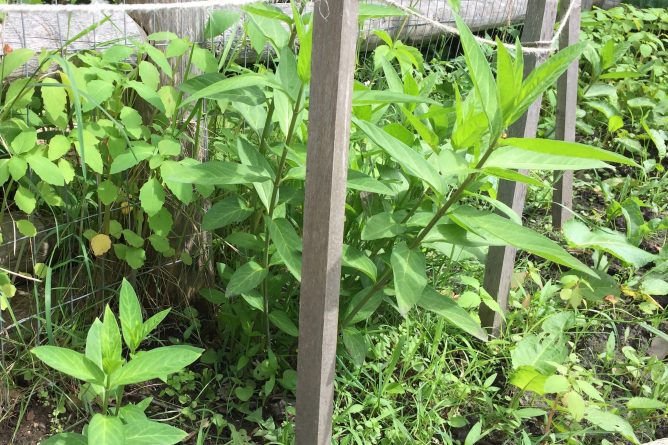
Here is what one of the plants looks like at Bramble Hill on April 21, 2019:
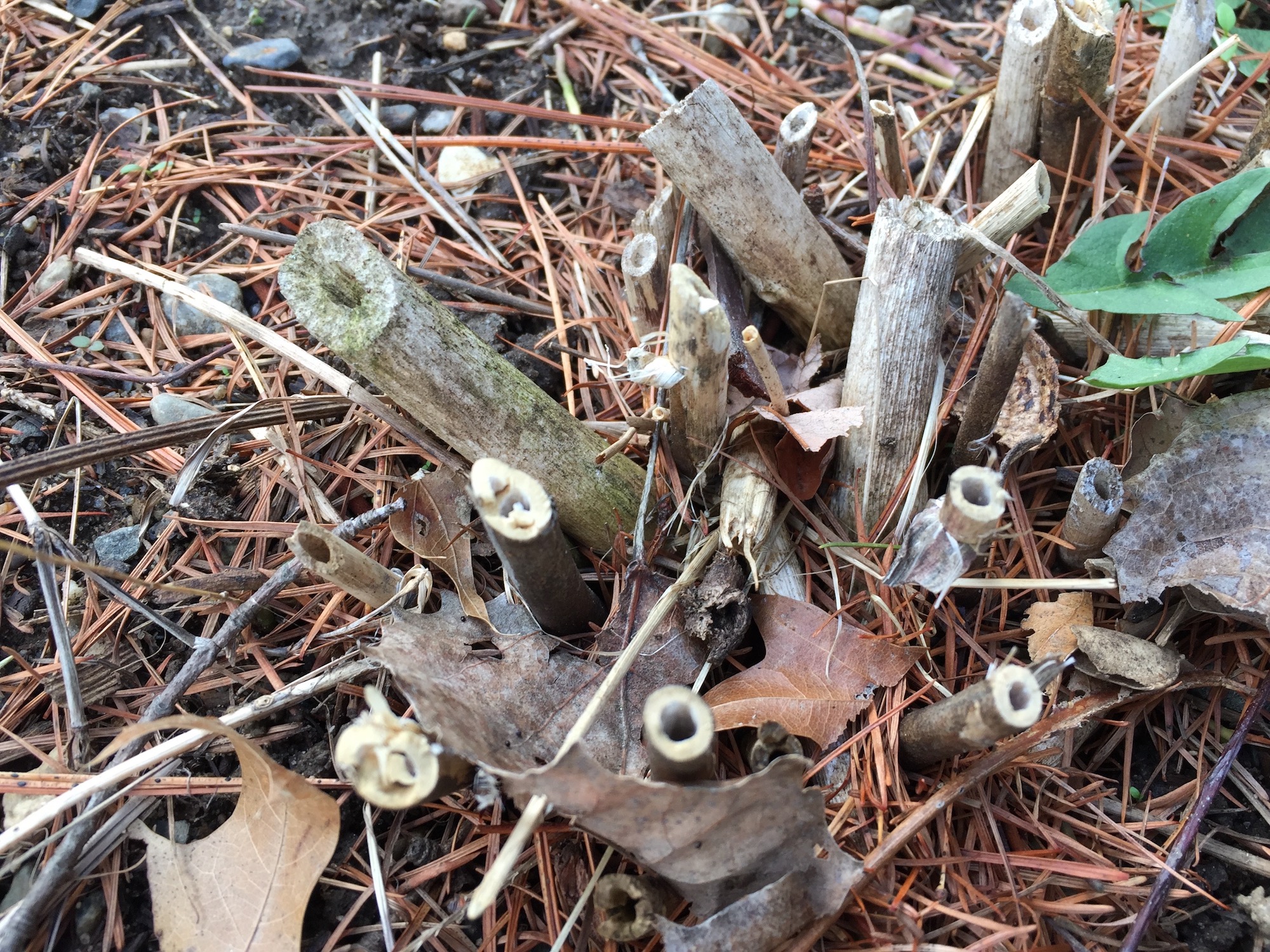
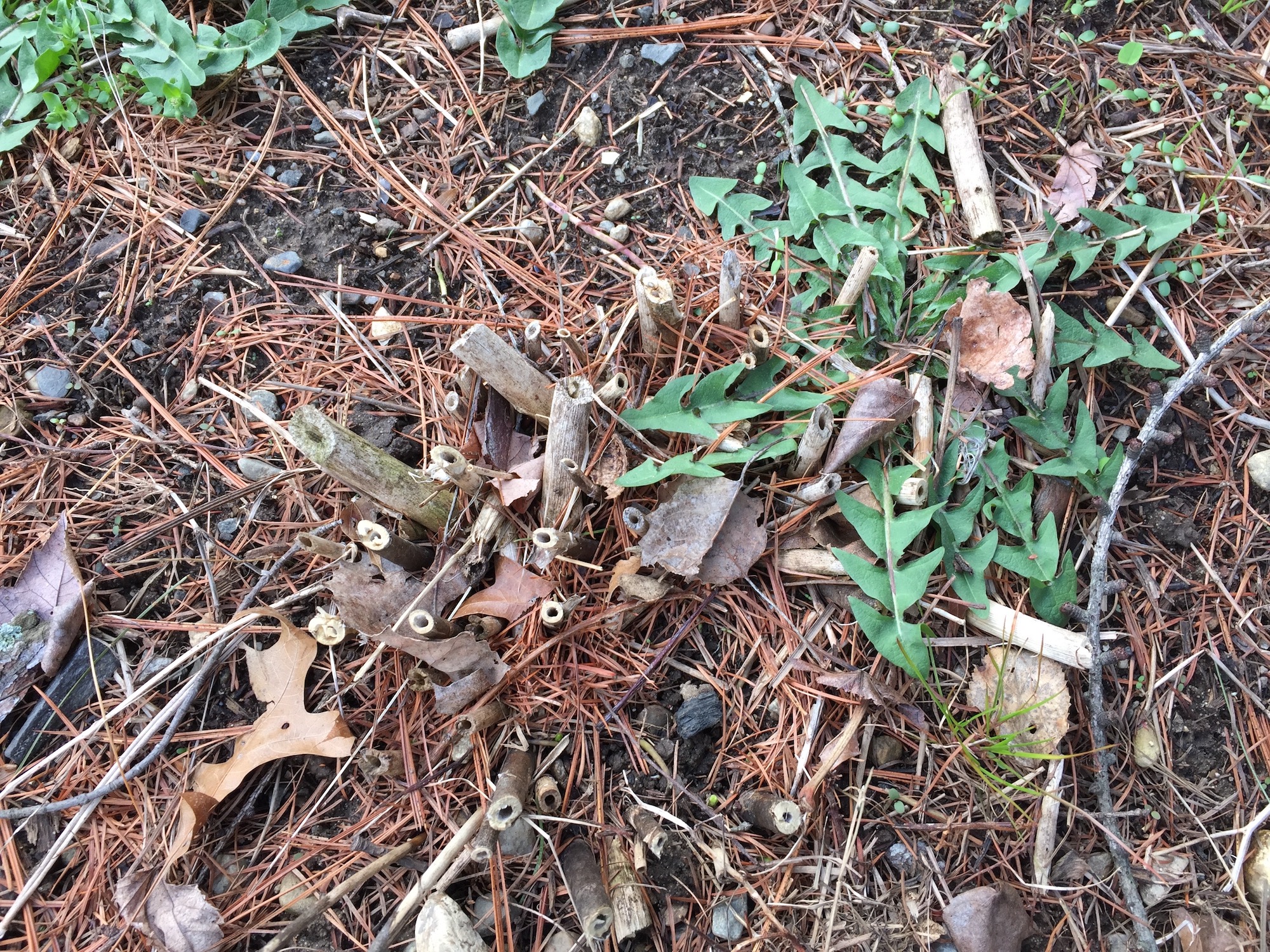
It was still dormant, so I figured it was OK to dig it up and move it. In the photo above you can see the fibrous tendrils that are still attached to the outer papery skin on a couple of the stalks. Below you can see the same plant but from a little higher up. This is what I sometimes think of as the “nothing to see here” vantage point. Mostly it’s the dandelion that stands out:
The resources I’ve consulted recommend moving milkweed plants either in the fall when the plants are dormant, or in the early spring. I have had good luck moving swamp milkweed before so I was pretty confident it would work. A. incarnata has a wide network of roots, but the plant doesn’t form colonies with long runners like common milkweed does, so it’s easier to be sure that you’ve dug up the whole root system.

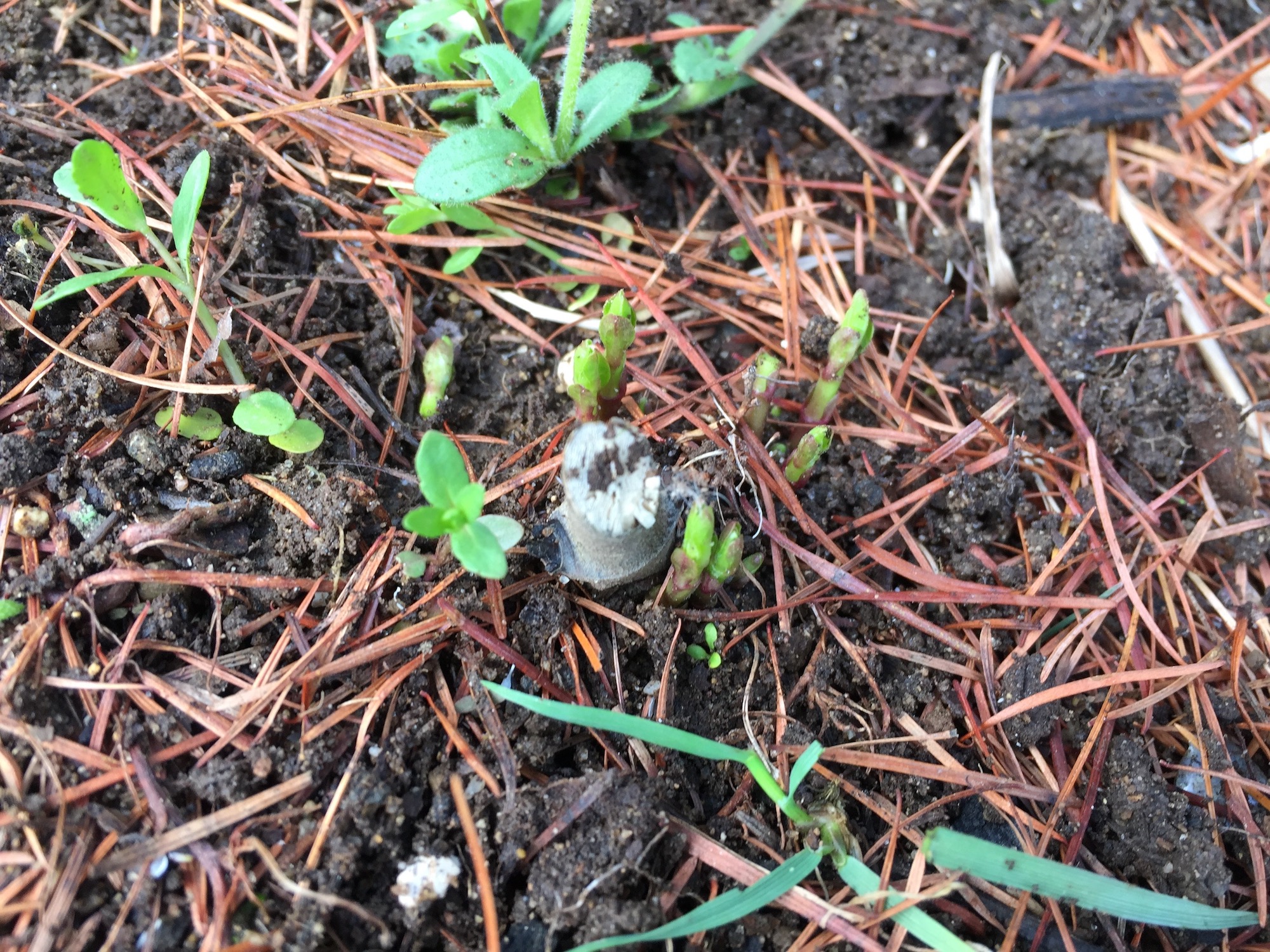
Here is what the emerging shoots of another A. incarnata plant looked like on April 21st. They are the small buds with a pinkish-purplish tinge:
Here is the mucky site I was moving them to:
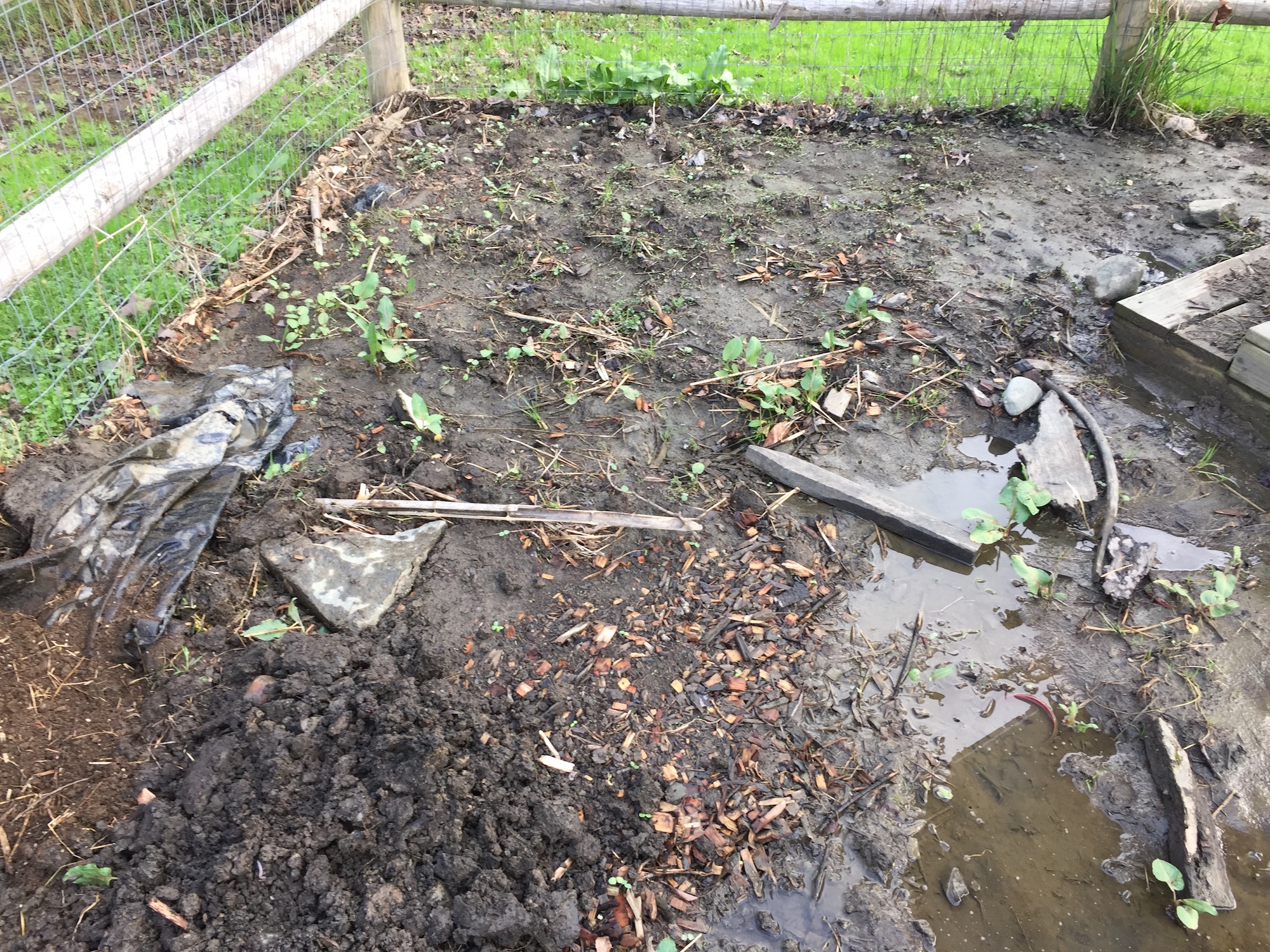
It is the designated mud-play area of our school garden at the Common School. A drainage culvert empties out underneath that wooden platform to the right of the photo, hence the additional water in that part of the garden. Since we have had such a rainy spring, it was still very puddly and wet at the end of April and early May.

Here’s what it looked like once I had dug over a “bed” next to the fence:
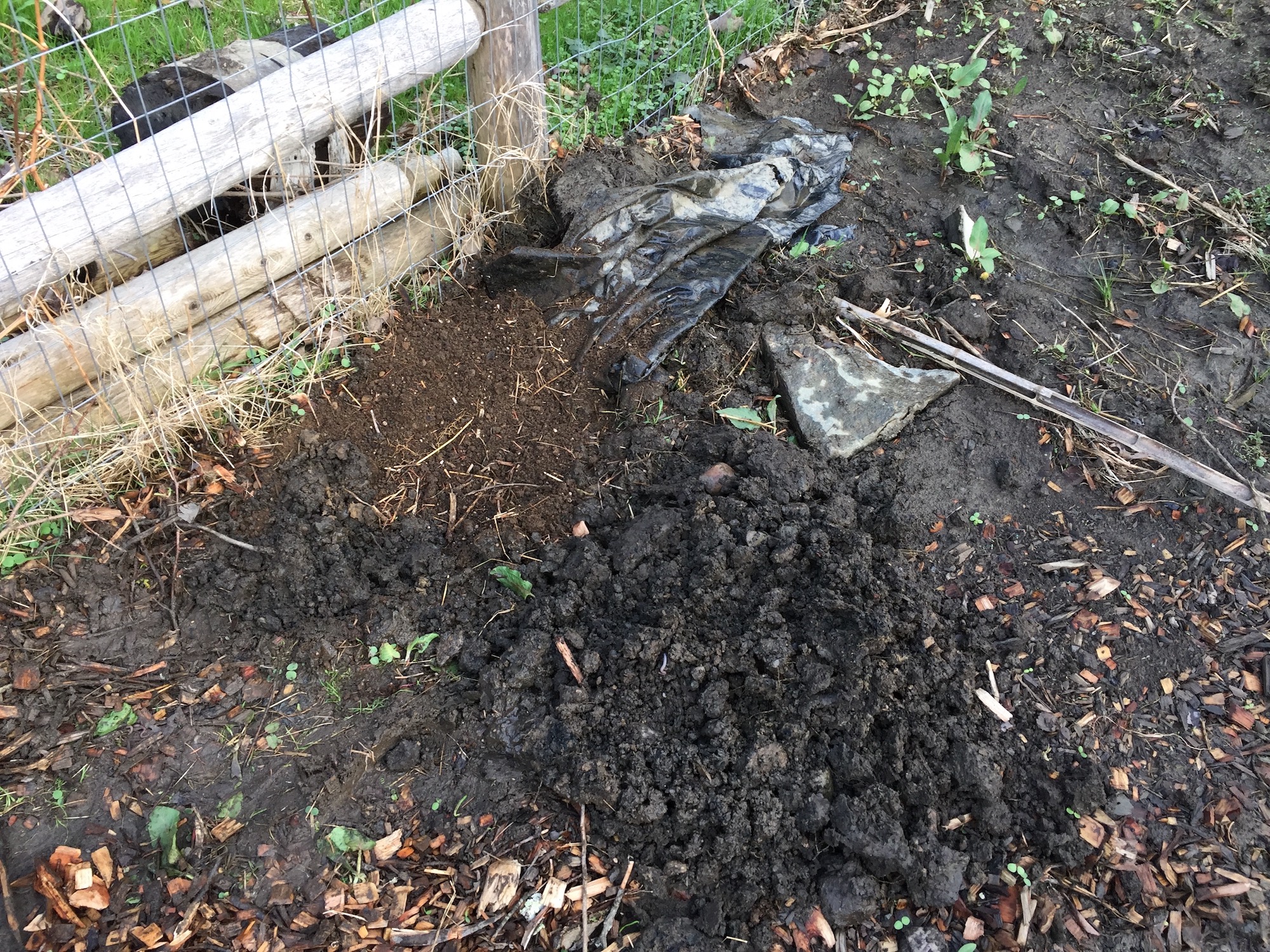
The black plastic was left over from our initial lawn-smothering process when we expanded that area of the garden in 2016.

Here is a plant emerging happily on May 10th:
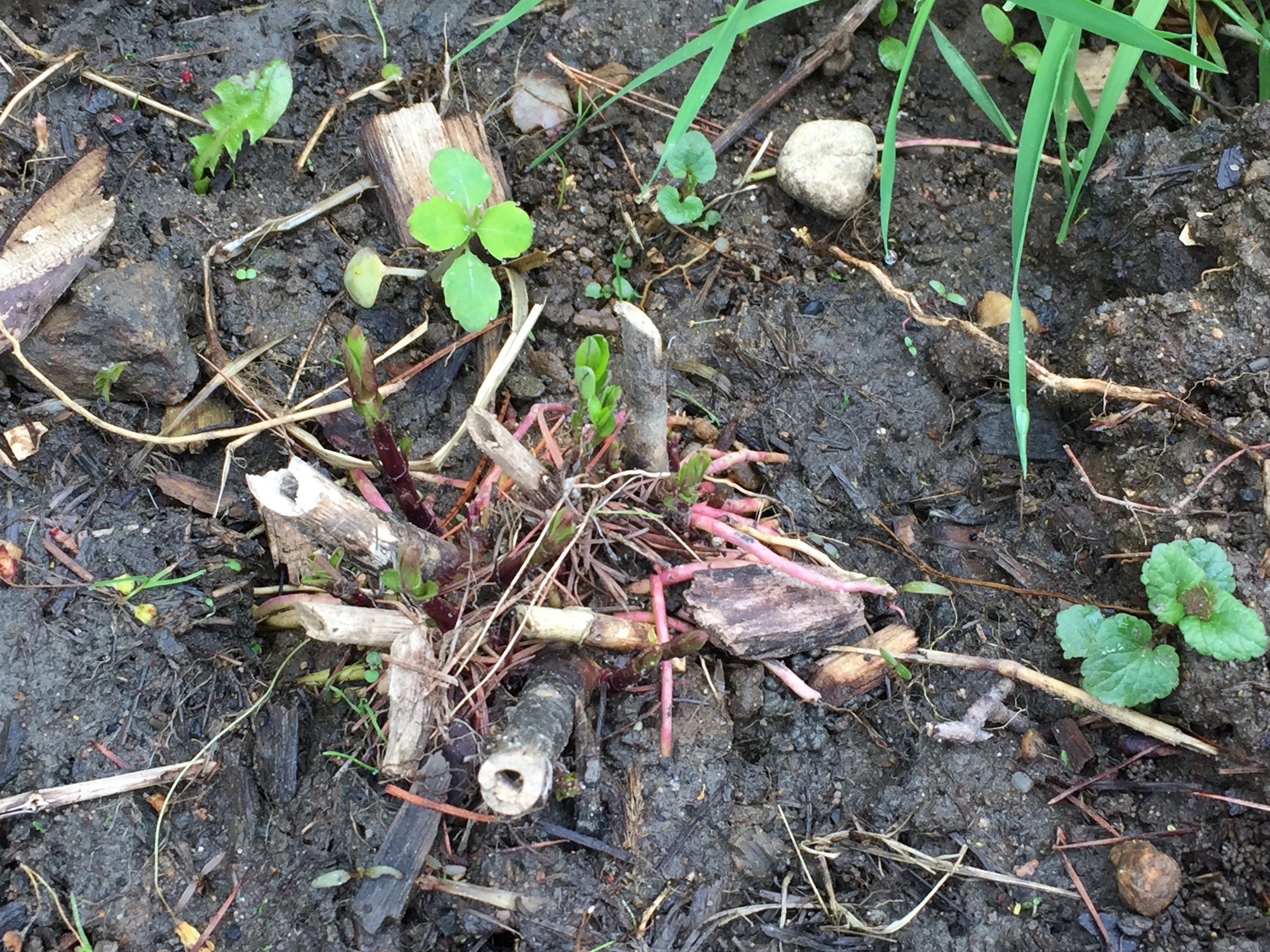
And on May 26th:

As of yesterday, June 17th, the plants were lush and happy:

It has continued to be a wet and cool spring, which is suiting them just fine:
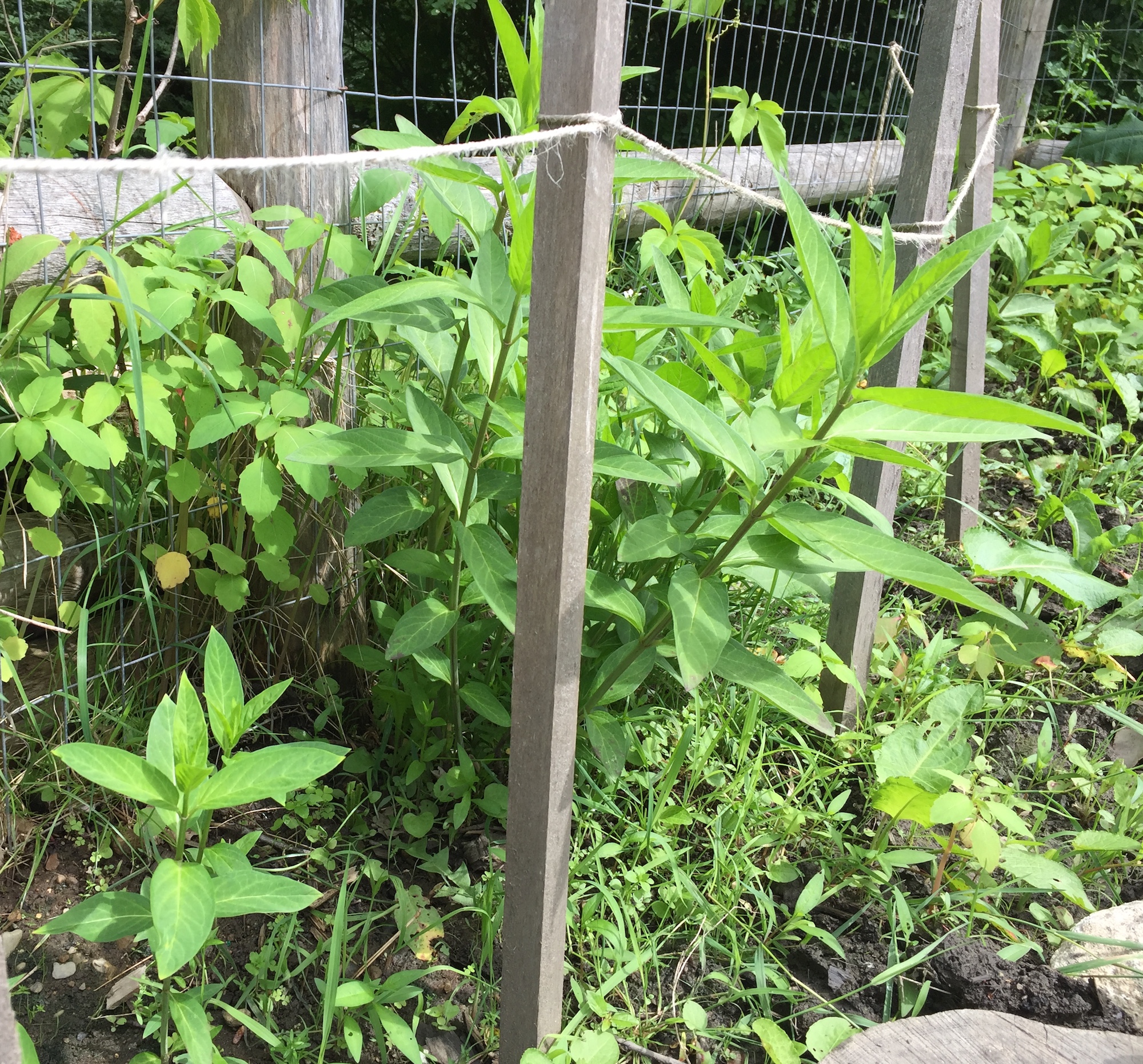
It remains to be seen if they will bloom this year. I have read that milkweed plants may forego flowering if they are stressed after transplanting. Whatever happens this summer, and in seasons to come, I hope they will be happier in their new watery home.
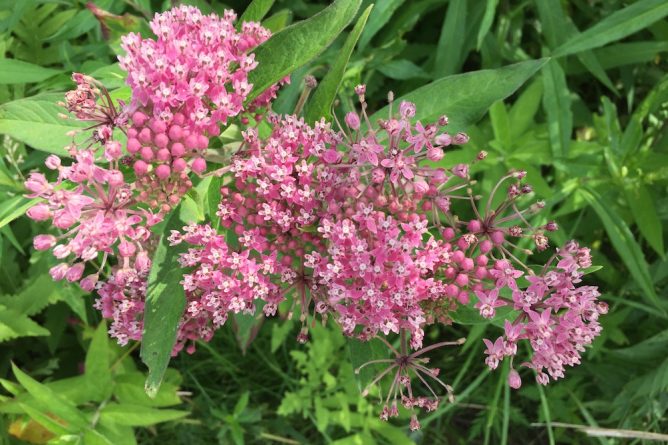
Swamp Milkweed Update

Ever since I planted my swamp milkweed (Asclepias incarnata) in 2014, it has suffered from yellow aphids. I thought I had mentioned this problem in an earlier post. However, when I went back to look for it, I found that comment was buried in a lot of other information about praying mantises and pesky garden bugs. So, here’s a post dedicated to my swamp milkweed and how it’s doing this summer.

There are many dimensions to the life of any plant, so I divided this up into sub-categories.

Yellow Aphids

I did a better job this year checking the plants for aphids. For most of the summer I didn’t notice any, and the plants seemed happy. I had been worried they wouldn’t come back because some of the plants were very badly affected by yellow aphids last summer. They had sad withered stalks and gave up the ghost early in the season. Last week, I noticed aphids for the first time, and promptly washed them off with water. I am used to squishing bugs, and tiny ones like aphids don’t gross me out too much. So, I employed a “rinse and squish” method of physical removal.

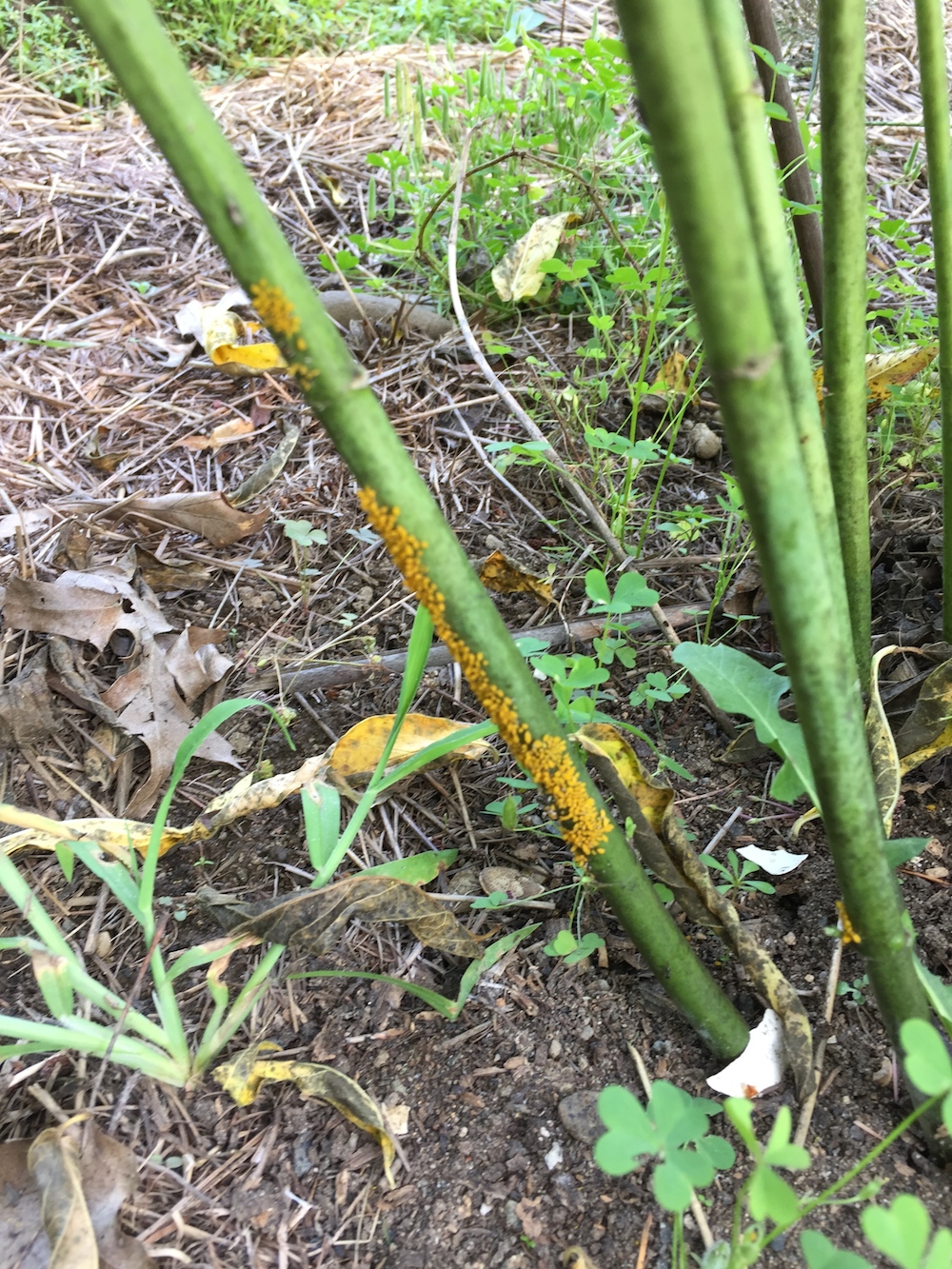
Here are yellow aphids on the base of the stalks, close to the ground:

Continue reading “Swamp Milkweed Update”

Swamp Milkweed Sightings

I first learned to identify swamp milkweed (Asclepias incarnata) in 2012 after discovering some lovely fibers near my sister’s apartment in Maryland. In 2015 I acquired some plants from Nasami Farm in Whately, MA for the Common School‘s fiber and dye plant garden at Bramble Hill Farm. For all this time, I have been keeping an eye out for it “in the wild” but haven’t seen it. Until now! (12/30/2023 I updated the link to Nasami.)

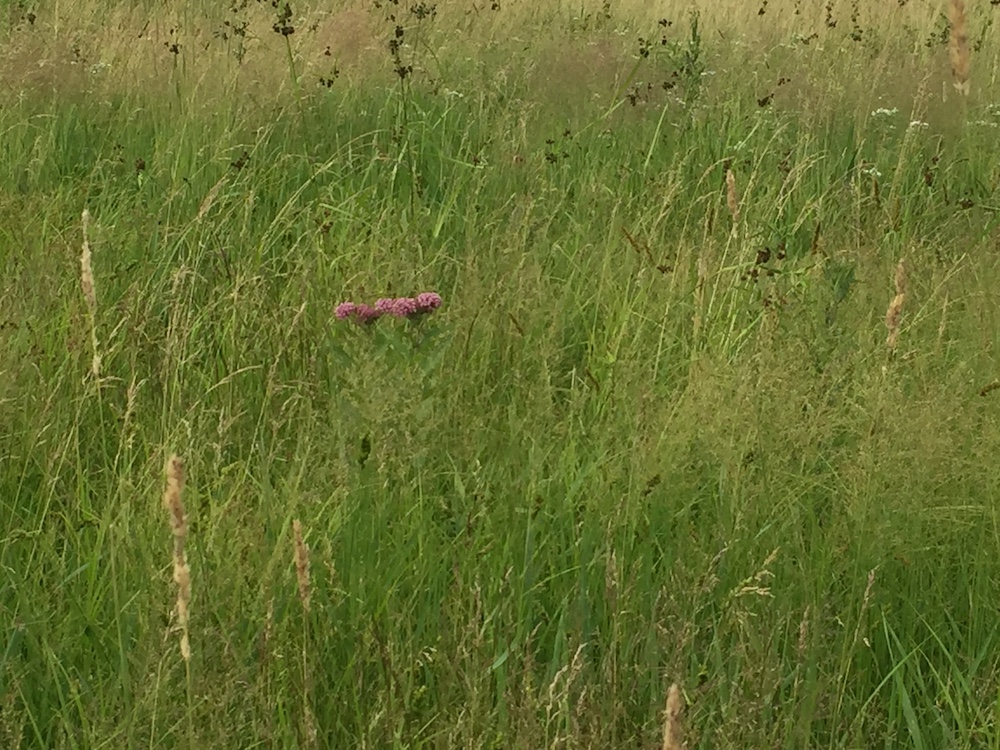
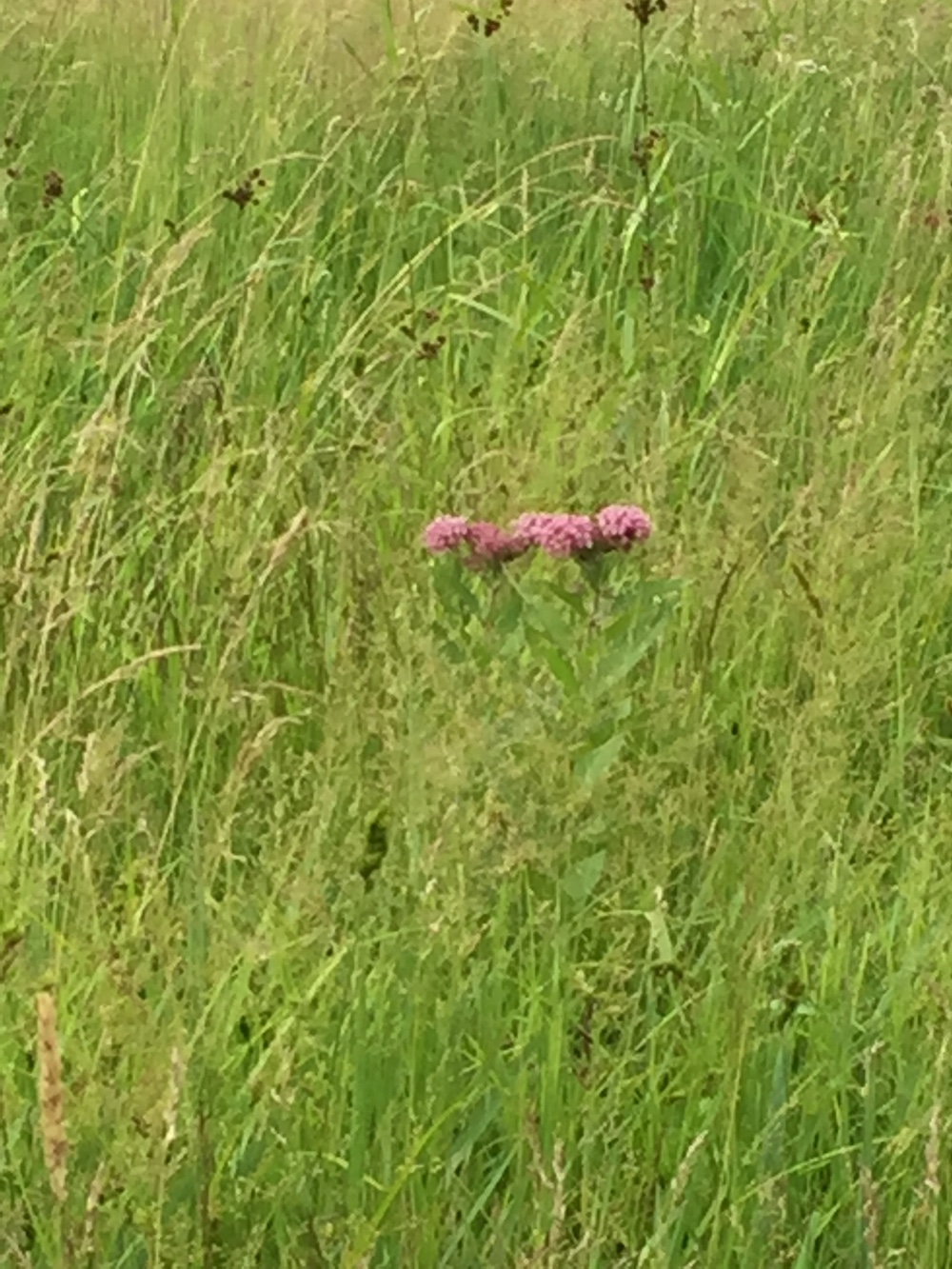
This month I have been spotting swamp milkweed all over the place. The first place I noticed it was in the bluebird field at Amherst College on July 6th. Admittedly, these photos are a bit like photos of Big Foot: blurry and indistinct. Trust me, though, it is swamp milkweed!

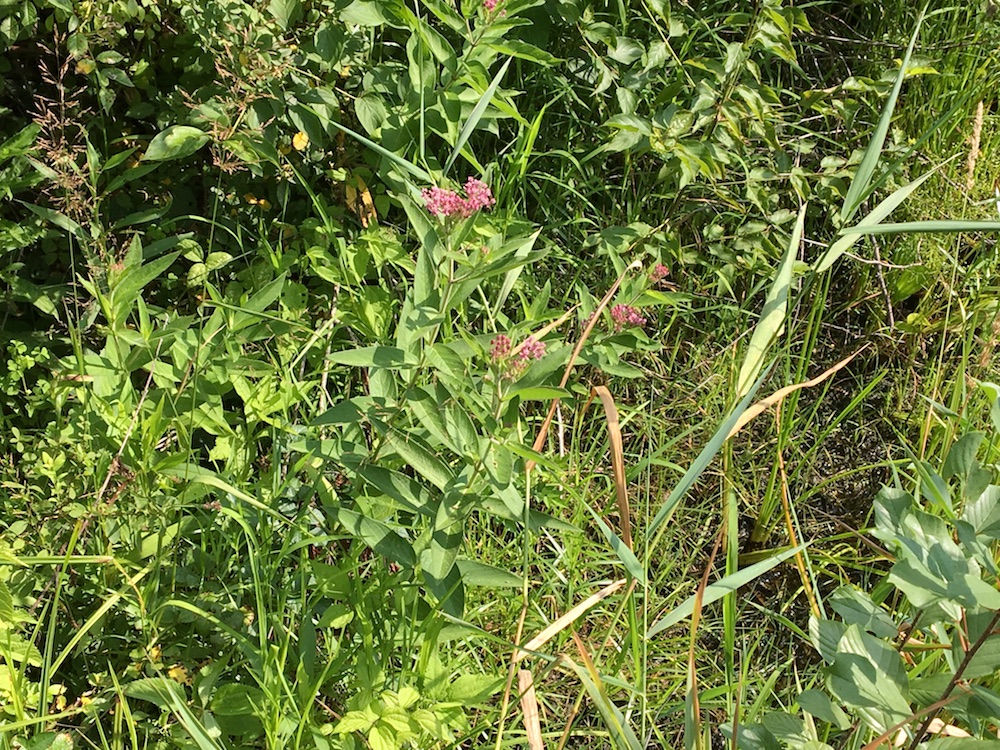
The next place I caught a sighting was in the Lawrence Swamp area of the Norwottuck Rail Trail in Amherst. It was right in the swamp, aptly. We could see several plants further out, but ran into the same blurry Big Foot photo problem. This one was close to the edge of the trail:

Continue reading “Swamp Milkweed Sightings”

Asclepias incarnata and Amsonia tabernaemontana

I wrote earlier this year that I wanted to add Amsonia tabernaemontana and Asclepias incarnata to my fiber and dye plant garden at Bramble Hill Farm. They are both bast fiber plants native to North America. Bast fibers are found in the stems of a plant (rather than around the seeds, like cotton, for example). I was introduced to the fiber potential of amsonia by fellow flax and linen study group member, Carolyn Wetzel, who brought some gorgeous, creamy-colored fibers to a meeting one night. A. incarnata was the “mystery cordage plant” from my sister’s parking lot that she helped me identify in 2012. I have finally managed to acquire both plants! Continue reading “Asclepias incarnata and Amsonia tabernaemontana”

Microscopic Fiber Images

Gardening season is kicking into gear here in Amherst, MA. This year I am planning to add swamp milkweed (Asclepias incarnata) and amsonia (Amsonia spp.) to my fiber and dyeplant garden at Bramble Hill Farm. I got the swamp milkweed seeds from my sister, Simone, from a plant near her apartment. You can see a photo of some cordage I made from it in an earlier blog post here.

I was inspired to grow amsonia after botanist and fellow-flax-enthusiast, Carolyn, brought some gorgeous bast fibers from her amsonia plants to one of our flax and linen study group get-togethers. On my initial foray to Andrew’s Greenhouse yesterday I found three varieties of amsonia available, but wasn’t sure which one might be best, so I shot off an email to Carolyn. She sent back some good advice, plus this incredibly awesome link which I must now urgently share with anyone else who might be reading my blog! Continue reading “Microscopic Fiber Images”